
Retinol versus bakuchiol: wat is beter voor je huid?
De wereld van huidverzorging kan overweldigend zijn, vooral als het gaat om het kiezen van het juiste anti-agingingrediënt. Retinol is al lange tijd een vaste waarde in veel K-Beauty routines vanwege de bewezen doeltreffendheid bij het verminderen van fijne lijntjes, acnelittekens en een ongelijkmatige teint. Bakuchiol is echter onlangs naar voren gekomen als een milder alternatief, dat vooral aantrekkelijk is voor mensen met een gevoelige of reactieve huid. Omdat beide ingrediënten indrukwekkende voordelen bieden, is het belangrijk om hun verschillen te begrijpen en te bepalen welke optie het beste bij jou past. In dit artikel bespreken we de belangrijkste aspecten van retinol versus bakuchiol, zodat je een weloverwogen keuze kunt maken die aansluit bij de unieke behoeften van je huid. Of je nu voor het eerst met deze ingrediënten werkt of je huidverzorgingsroutine wilt verfijnen, onze deskundige inzichten helpen je de beste opties te vinden voor een gezonde, stralende huid.
Medische disclaimer
Dit artikel is uitsluitend bedoeld voor informatieve doeleinden en mag niet worden beschouwd als medisch advies. Het vervangt geen professionele diagnose, behandeling of gepersonaliseerde aanbevelingen. Als je aanhoudende huidaandoeningen of allergieën hebt, of irritatie ervaart, raden we je aan een gekwalificeerde dermatoloog of andere zorgprofessional te raadplegen voordat je met je huidverzorgingsroutine begint of deze wijzigt.
Is dit artikel geschikt voor jou?
Dit artikel is geschikt voor jou als je:
- Een gevoelige of reactieve huid hebt en op zoek bent naar milde anti-agingoplossingen.
- Nog niet eerder retinol of bakuchiol hebt gebruikt en je opties wilt begrijpen.
- Geïnteresseerd bent in het opnemen van effectieve K-Beauty ingrediënten in je huidverzorgingsroutine.
Kijk liever verder als je:
- Ernstige huidaandoeningen hebt waarvoor gespecialiseerde dermatologische behandelingen nodig zijn.
- In het verleden negatieve reacties op retinol hebt ervaren en niet openstaat voor alternatieven.
- Op zoek bent naar geleidelijke resultaten zonder de langere inzet te begrijpen die deze ingrediënten vereisen.
Deskundige uitleg
Retinol en bakuchiol staan beide bekend om hun anti-agingvoordelen, maar verschillen aanzienlijk in hun formulering en geschiktheid voor verschillende huidtypen. Retinol, een derivaat van vitamine A, wordt vaak gebruikt in cosmetische formules die gericht zijn op een gladdere huidtextuur en een stevigere uitstraling. Resultaten en tolerantie variëren afhankelijk van de formule, concentratie en gebruiker. Het kan echter ook irritatie veroorzaken, vooral bij gevoelige huidtypen. Bakuchiol is daarentegen een plantaardig alternatief dat wordt gewonnen uit de zaden en bladeren van de Psoralea corylifolia-plant. Het biedt vergelijkbare voordelen als retinol, helpt fijne lijntjes te verminderen en de elasticiteit van de huid te verbeteren, maar wordt over het algemeen beter verdragen door mensen met een reactieve huid. Veelgemaakte fouten bij het gebruik van retinol zijn beginnen met een te hoge concentratie of het te vaak aanbrengen ervan, wat kan leiden tot droogheid en irritatie. Normale reacties op beide ingrediënten kunnen lichte roodheid of schilfering zijn, vooral bij retinol. Waarschuwingssignalen van overmatig gebruik zijn aanhoudende irritatie of ernstige roodheid; in dat geval moet je het gebruik staken en een dermatoloog raadplegen. Als je deze nuances begrijpt, kun je het juiste product kiezen voor jouw huidtype en huidbehoeften.
Belangrijke ingrediënten
Producten met retinol en bakuchiol bevatten vaak aanvullende, heilzame ingrediënten die hun werking versterken. Zoek bij retinol naar formules met hyaluronzuur voor hydratatie, niacinamide voor verzachting en antioxidanten zoals vitamine C, die de huid kunnen laten stralen en vrije radicalen kunnen helpen bestrijden. Het is belangrijk om retinol niet gelijktijdig te gebruiken met andere krachtige werkzame stoffen, zoals vitamine C of AHA/BHA-exfolianten, omdat dit tot meer irritatie kan leiden. Producten met bakuchiol kunnen ook verzachtende ingrediënten bevatten, zoals centella asiatica of kamille, die ontstekingen en roodheid helpen kalmeren. Mensen met een gevoelige huid moeten voorzichtig zijn en eerst een patchtest uitvoeren om negatieve reacties te voorkomen. Over het algemeen kunnen producten met elkaar aanvullende ingrediënten de voordelen versterken en mogelijke bijwerkingen beperken.
Aanbevolen Koreaanse routine
Ochtendroutine (AM)
- Stap 1: Reiniging - Gebruik een milde, hydraterende reiniger om je huid voor te bereiden.
- Stap 2: Toner - Breng een verzachtende toner aan om de pH-waarde van de huid in balans te brengen.
- Stap 3: Bakuchiol-serum - Voeg een product met bakuchiol toe voor anti-agingvoordelen.
- Stap 4: Moisturizer - Houd de hydratatie vast met een lichte moisturizer.
- Stap 5: Zonnebrandcrème - Sluit af met een breedspectrum-SPF om de huid tegen uv-schade te beschermen.
Avondroutine (PM)
- Stap 1: Reiniging - Gebruik een milde reiniger om make-up en onzuiverheden te verwijderen.
- Stap 2: Toner - Breng een toner aan om de huid te hydrateren en voor te bereiden.
- Stap 3: Retinolserum - Introduceer een retinolproduct en begin met een lage concentratie.
- Stap 4: Moisturizer - Breng een voedende moisturizer aan om de huidbarrière te ondersteunen.
- Stap 5: Optioneel: Oogcrème - Gebruik een oogcrème met retinol voor een gerichte behandeling.
Producten in deze vergelijking
Gebruik de productrollen om vergelijkbare producten met elkaar te vergelijken. Beschikbaarheid, prijs en formule kunnen veranderen; controleer daarom de actuele productpagina voordat je tot aankoop overgaat.

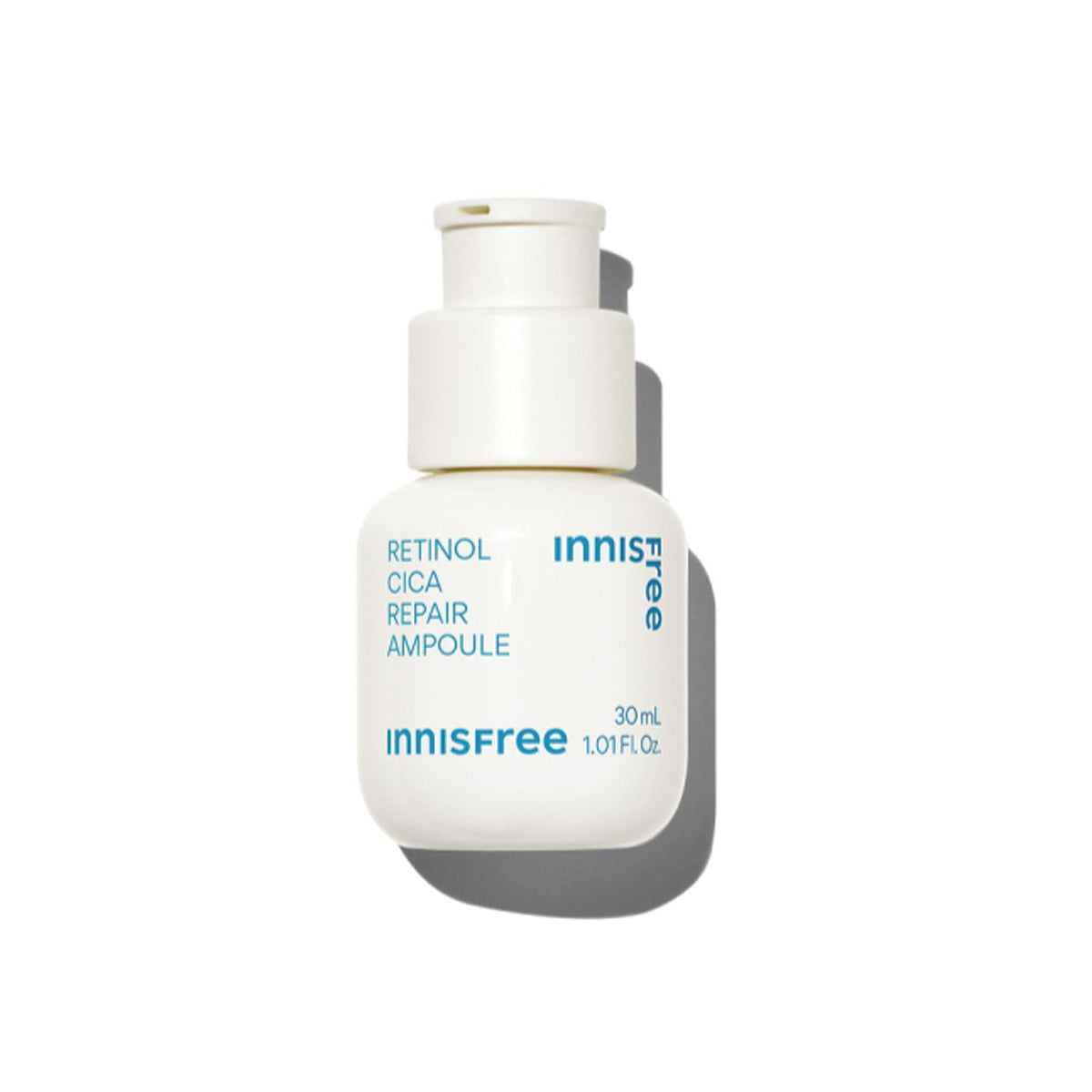
innisfree Retinol Cica Repair Ampoule 30ml
innisfree
€34.80
Nu beschikbaar
Bekijk de beste match![[PURITO SEOUL] Timeless Bloom Bakuchiol Serum 30ml](https://cdn.shopify.com/s/files/1/0873/9255/1177/files/product_images_1718256231.Bakuchiol-Serum-benefit1736523766.png?v=1738355415)
[PURITO SEOUL] Timeless Bloom Bakuchiol Serum 30ml
PURITO SEOUL
€42.20
Nu beschikbaar
Vergelijk deze optie![[MANYO FACTORY] Our Vegan Heartleaf Moisture Calming Cream 53ml](https://cdn.shopify.com/s/files/1/0873/9255/1177/files/product_images_1746688899.110820682900524177_16084768391747415362.jpg?v=1754423696)
[MANYO FACTORY] Onze vegan Heartleaf vochtinbrengende kalmerende crème 53ml
Manyo Factory
€32.00
Nu beschikbaar
Bekijk moisturizer
MEDIHEAL Kalmerende zonnecrème met Tea Tree 50ml (SPF 50+, PA++++)
MEDIHEAL
€25.40
Nu beschikbaar
Bekijk zonnebrandcrèmeRealistische verwachtingen
Textuur, finish, tolerantie en zichtbaar resultaat variëren afhankelijk van de formule, routine en gebruiker. Vertrouw niet op een vast resultaat na 7, 14 of 30 dagen; vergelijk in plaats daarvan het actuele etiket, de rol binnen je routine en je persoonlijke tolerantie.
Veelgestelde vragen
Hoe begin ik met retinol?
Begin met een lage concentratie retinol en breng het 's avonds één of twee keer per week aan. Verhoog de frequentie geleidelijk naarmate je huid eraan gewend raakt en gebruik altijd daarna een moisturizer.
Kan bakuchiol tijdens de zwangerschap worden gebruikt?
Bakuchiol wordt tijdens de zwangerschap beschouwd als een veiliger alternatief voor retinol, maar het is altijd het beste om een zorgverlener te raadplegen om de veiligheid te waarborgen.
Is bakuchiol net zo effectief als retinol?
Bakuchiol wordt vaak gepositioneerd als alternatief voor het verminderen van de zichtbaarheid van fijne lijntjes, maar het is niet gelijkwaardig aan retinol en het is niet gegarandeerd geschikt voor de gevoelige huid. Vergelijk de volledige formule en je individuele tolerantie.
Kan ik retinol en bakuchiol samen gebruiken?
Hoewel beide ingrediënten anti-agingvoordelen kunnen bieden, is het raadzaam om ze op verschillende momenten of op afwisselende dagen te gebruiken om irritatie tot een minimum te beperken.
Voor welke huidtypes biedt bakuchiol de meeste voordelen?
Bakuchiol is ideaal voor de gevoelige, droge of reactieve huid, omdat het anti-agingvoordelen biedt zonder de irritatie die vaak met retinol wordt geassocieerd.
Hoe lang duurt het voordat ik resultaat zie van retinol?
De meeste gebruikers zien binnen 4-6 weken de eerste verbeteringen, met duidelijkere resultaten na 3-6 maanden consistent gebruik.
Conclusie
Samengevat bieden zowel retinol als bakuchiol waardevolle anti-agingvoordelen, maar zijn ze geschikt voor verschillende huidbehoeften en gevoeligheden. Retinol is een krachtig ingrediënt voor wie het goed verdraagt, terwijl bakuchiol een milder alternatief biedt voor de gevoelige huid. Uiteindelijk moet je keuze afhangen van je huidtype, huidproblemen en de manier waarop je huid op deze ingrediënten reageert. Onthoud dat consistentie de sleutel is in elke huidverzorgingsroutine. Kies het juiste product, heb geduld en geniet van de reis naar een gezondere, stralendere huid.
Over ons K-Kare
K-Kare is jouw toegewijde Koreaanse beautywinkel, die het beste van K-Beauty rechtstreeks bij je thuis bezorgt. We selecteren effectieve en innovatieve producten van topmerken — van serums en essences tot moisturizers en zonnebescherming.
Elk product dat we aanbieden is 100% origineel en zorgvuldig geselecteerd. Dankzij internationale verzending naar Europa, het Midden-Oosten en Latijns-Amerika maken we het eenvoudig om overal te genieten van authentieke Koreaanse huidverzorging.
Delen:
Koreaanse retinolgids: kies één behandeling en ondersteun de huidbarrière
Sulwhasoo voor de droge huid: gids voor producttypes en texturen